Machine Learning Techniques and Use Cases
When choosing an ML solution, it’s not just about the technology, but also about understanding the appropriate ML techniques for specific use cases. ML learning techniques represent the backbone of modern AI and empower systems to learn from data and make intelligent decisions without explicit programming. These techniques include supervised learning, unsupervised learning, and reinforcement learning, which each serve a distinct purpose.
**

1: Supervised learning
In supervised learning, the algorithms are trained on labeled data. The goal is to learn a mapping function that can predict the output for new, unseen input data.
Supervised learning use cases
Supervised learning is a popular type of ML because it’s widely applicable. It’s called supervised learning because there needs to be a supervisor. The supervisor is labeled training data. Like any student, a supervised algorithm needs to learn by example. Essentially, this type of algorithm uses training data to help determine the patterns and relationships between the inputs and outputs. For example, pictures of cars labeled by people as cars are provided to the model. Then, when the model receives a new picture of a car that is not labeled, the model can predict that it is a car.
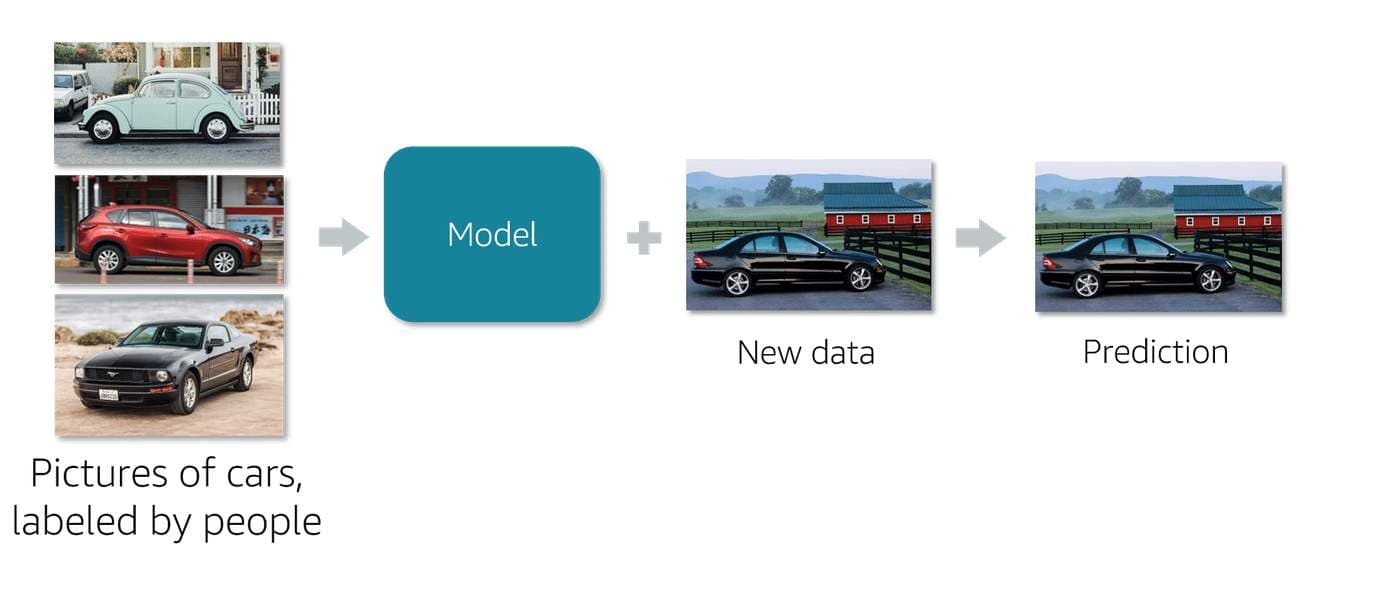
The model learns by identifying patterns in data that's already labeled.
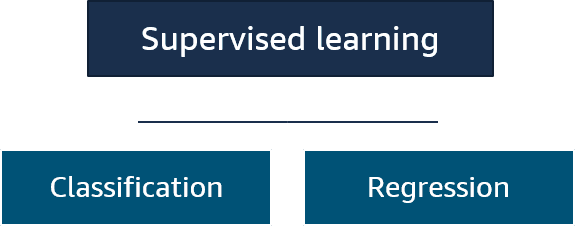
Types of supervised ML
Supervised learning has two subcategories—classification and regression.
Classification is a supervised learning technique used to assign labels or categories to new, unseen data instances based on a trained model. The model is trained on a labeled dataset, where each instance is already assigned to a known class or category. The goal of classification is to learn patterns from the training data and use them to predict the class or category for new unlabeled data instances.
Use cases include the following:
- Fraud detection
- Image classification
- Customer retention
- Diagnostics
Unsupervised learning use cases
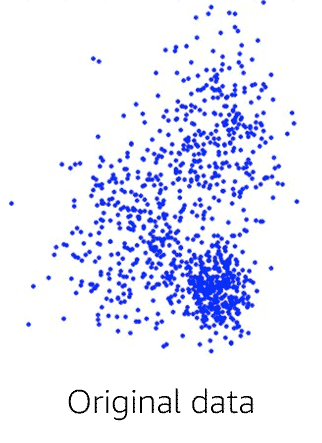
Recall that in supervised learning, the data includes labels so that the model can learn the patterns and relationships. In unsupervised learning, the model is trained on unlabeled data. The algorithm tries to discover hidden patterns or structures within the data without any prior information or guidance.
In this type of learning, the machine has to uncover and create the labels itself. These models use the data they’re presented with to detect emerging properties of the entire dataset and then construct patterns.
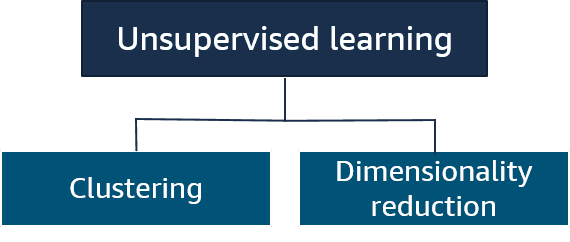
Types of unsupervised ML
Unsupervised learning encompasses various techniques and algorithms. Two main subcategories of unsupervised learning are clustering and dimensionality reduction.
A common subcategory of unsupervised learning is clustering. This kind of algorithm groups data into different clusters based on similar features or distances between the data point to better understand the attributes of a specific cluster.
For example, by analyzing customer purchasing habits, an unsupervised algorithm can identify a company as being large or small.
Use cases include the following:
- Customer segmentation
- Targeted marketing
- Recommended systems
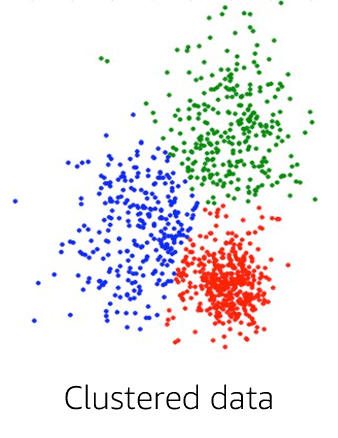
Reinforcement learning use case
Another kind of algorithm that has gained popularity recently is reinforcement learning. Unlike the first two algorithms, this one continuously improves its model by mining feedback from previous iterations. In reinforcement learning, an agent continuously learns through trial and error as it interacts in an environment. Reinforcement learning is broadly useful when the reward of a desired outcome is known, but the path to achieving it isn’t—and that path requires a lot of trial and error to discover.
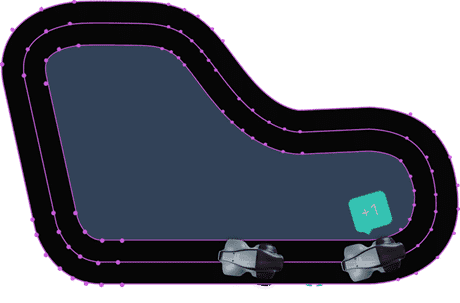
For example, in the AWS DeepRacer simulator, the agent is the virtual car, and the environment is a virtual racetrack. The actions are throttle and steering inputs to the car. The goal is completing the racetrack as quickly as possible and without deviating from the track.The car needs to learn the desired driving behavior to reach the goal of completing the track. To learn this, rewards are used to incentivize the model to learn the desired driving behavior.
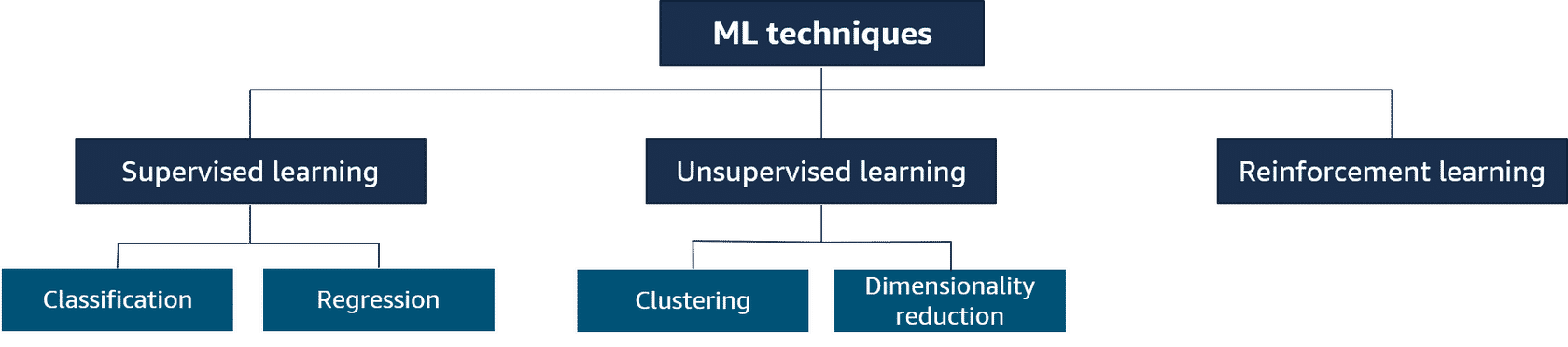
In summary, as you can see in the following graphic, machine learning techniques encompass diverse methods, including supervised learning, unsupervised learning, and reinforcement learning. Supervised learning has two subcategories: classification and regression. Similarly, unsupervised learning has two subcategories: clustering and dimensionality reductions. To use the full potential of ML, you should understand the principles and applications of these techniques.
Next, you will test your knowledge with a set of knowledge check questions.