Responsible Preparation for Datasets
An essential requirement of responsible AI is to prepare your datasets responsibly. This means that you need to have balanced datasets to train your models.
Remember that you can use SageMaker AI Clarify and SageMaker Data Wrangler to help balance your datasets.
Balancing datasets

Balanced datasets are important for creating responsible AI models that do not unfairly discriminate or exhibit unwanted biases.
Balanced datasets should represent all groups of people or data topics. This means that the dataset should contain an adequate number of examples or instances of each group to ensure that the model is not biased towards any particular group or factor. The concept of balanced datasets is particularly important in applications like hiring, lending, or criminal justice, where fairness and equity are essential.
To achieve balanced datasets, the data collected needs to be inclusive and diverse, and the data also needs to be curated to optimize it for training.
Inclusive and diverse data collection
Inclusiveness and diversity in data collection ensure that data collection processes are fair and unbiased. Data collection should accurately reflect the diverse perspectives and experiences required for the use case of the AI system. This includes a diverse range of sources, viewpoints, and demographics. By doing this, the AI system can work to ensure decisions are unbiased in their performance.
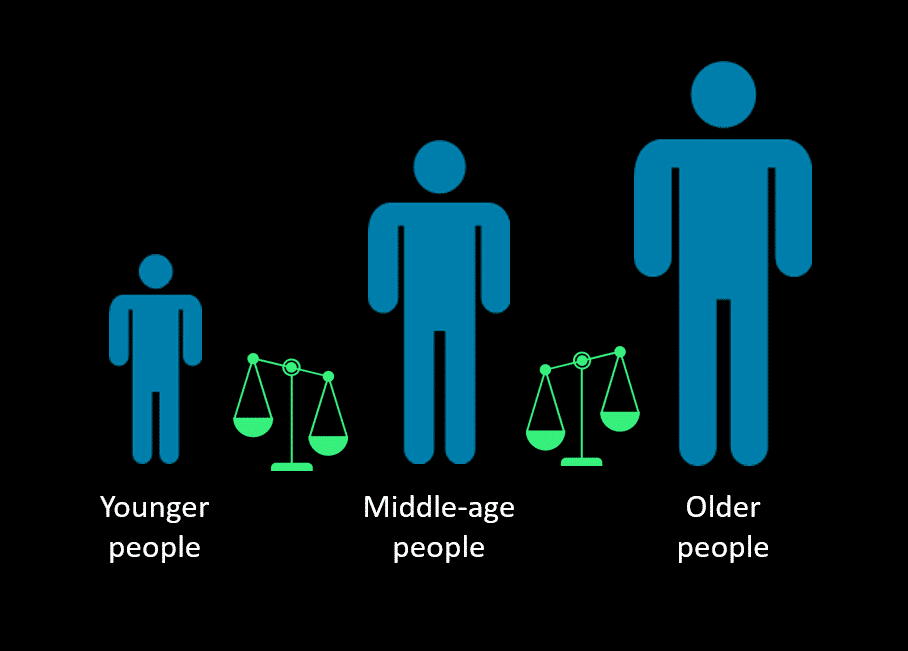
For example, if an ML model is trained primarily on data from middle-aged individuals, it might be less accurate when making predictions involving younger and older people. Therefore, the datasets should be collected so that age groups are equally represented.
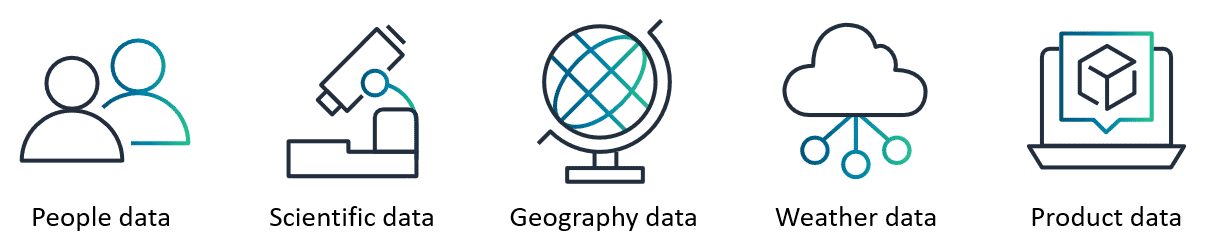
Inclusiveness and diversity in data collection is a primary concern for data that focuses on people. This is because alienating groups of people in the training data can lead to societal harms and legal repercussions. However, inclusiveness and diversity in data collection should be a primary focus regardless of the topic. For example, collection of data for people, scientific research, geography, weather, products, and other topics should be collected with a focus on the diverse range for each topic.
By promoting inclusiveness and diversity within AI, organizations can promote fairness, transparency, and accountability in their AI systems and contribute to the responsible development of AI technology.
Data curation
The second part of balancing the datasets involves curation of the datasets. Curating datasets is the process of labeling, organizing, and preprocessing the data so that it can perform accurately on the model. The curation can help to ensure that the data is representative of the problem at hand and free of biases or other issues that can impact the accuracy of the AI model. Curation helps to ensure that AI models are trained and evaluated on high-quality, reliable data that is relevant to the task they are intended to perform.
The main steps of curating data include data preprocessing, data augmentation, and regular auditing.

Data preprocessing
Preprocess the data to ensure it is accurate, complete, and unbiased. Techniques such as data cleaning, normalization, and feature selection can help to eliminate biases in the dataset.
Data augmentation
Use data augmentation techniques to generate new instances of underrepresented groups. This can help to balance the dataset and prevent biases towards more represented groups.
Regular auditing
Regularly audit the dataset to ensure it remains balanced and fair. Check for biases and take corrective actions if necessary.
Balance your data for the intended use case
The use case for the AI system will determine how the data needs to be balanced. For example, if you are creating an AI system about cancer in children, you would collect the data and curate it to focus on children and not include datasets on adults.
Next, you will test what you have learned in this section with a knowledge check.