Business case
AnyCompany: A fashion retailer
AnyCompany, a trendy online fashion retailer, faces challenges with high cart abandonment rates and low repeat purchases. Customers often feel overwhelmed by the vast options and find it difficult to determine which products suit their personal style and needs.
AnyCompany aims to personalize the shopping experience more effectively, increasing user engagement, reducing cart abandonment, and boosting repeat purchases.
AnyCompany is willing to use the power of generative AI to achieve these goals. Specifically, they will monitor the following metrics:
- Conversion rate: Increase in successful purchases for each site visit
- Average order value: Increase in the dollar amount spent for each transaction
- Customer retention rate: Increase in the percentage of returning customers
The solution
AnyCompany will use an LLM that will have several functions. It will generate dynamic product descriptions, offer personalized shopping advice, and improve automated interactions. The solution will include the following:
- Utilization of specific datasets: Fine-tuning on transactional data, customer feedback, and user interaction data (likes, clicks, past purchases).
- Integration with recommendation engine: The AI model will adapt product displays and promotions to fit individual customer profiles in real time.
- Continuous learning: Adjust the model periodically, based on new customer data and evolving fashion trends, optimizing recommendation accuracy without manual intervention.
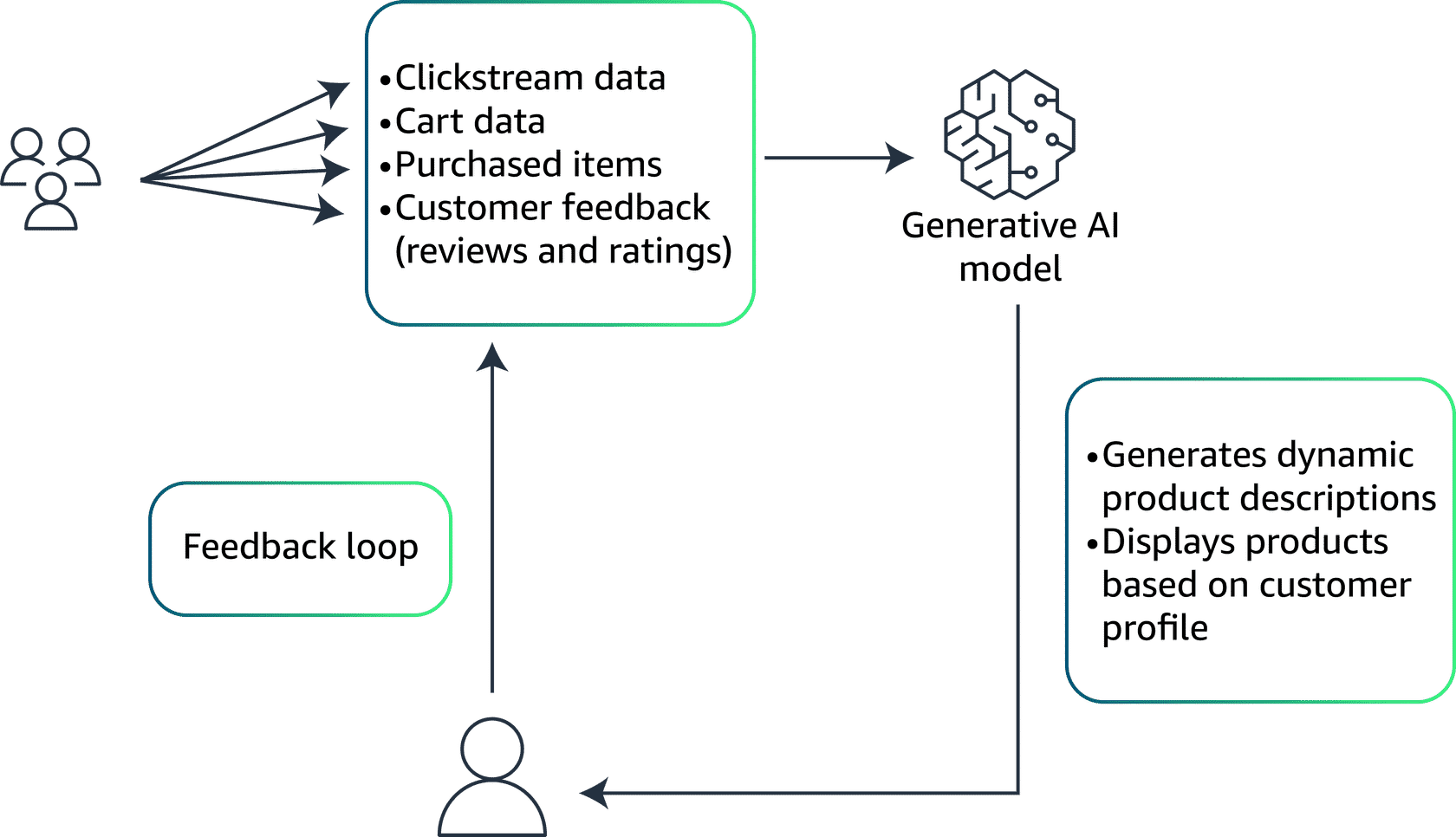
2: Model outputs
2: Model outputs
The generative AI model generates dynamic product descriptions that are based on customer preferences, habits, and more.
The products displayed for a given customer will be also dynamically modified.
In the next lesson, you will learn how fine tuning can be used to optimize a model.